Tired of conference venues that promise everything and deliver mediocrity? We offer
14
distinct meeting spaces ranging from 20 m² to 553 m² in the heart of Zagreb. Whether you're planning a board
meeting
for eight or a conference for 500, the right space with the right amenities actually exists here.
Why Location Changes Everything
You're in Zagreb's center, right on the main square. Attendees don't get lost
hunting
for suburban office parks. Out-of-town visitors walk from their hotels. Local participants know exactly where
they're going. This isn't just convenience—it's respect for everyone's time and a signal that your event
matters.
Spaces for Every Need
Intimate Small Meeting Rooms (20-28 m²)
Stradun III (20 m²) and the Libertas salons (25 m² each) handle
6-12 people. Perfect for executive meetings, client consultations, or small
team
sessions where everyone needs to see and hear each other clearly. These rooms include screens, projectors,
Wi-Fi,
and natural light without the waste of booking oversized venues.
Stradun I & II (28 m² each)
accommodate 10-14 people with two windows for
excellent natural light. Stradun I's unique feature is three entry/exit points—ideal for training or
workshops
with
movement between activities.
Mid-Sized Conference Rooms (56-100 m²)
Ban Mažuranić (56 m²)
fits 20-35 people and includes professional audio-visual
equipment—sound system, multiple displays, and premium finishes. Despite smaller size, it delivers
conference-quality capabilities.
Ban Dašković (70 m²)
accommodates 30-50 people in a windowless environment
perfect for presentation-heavy events where external distractions would interfere. Full A/V setup ensures
professional delivery.
Ban Frankopan (100 m²)
handles 40-70 people with four windows for natural light
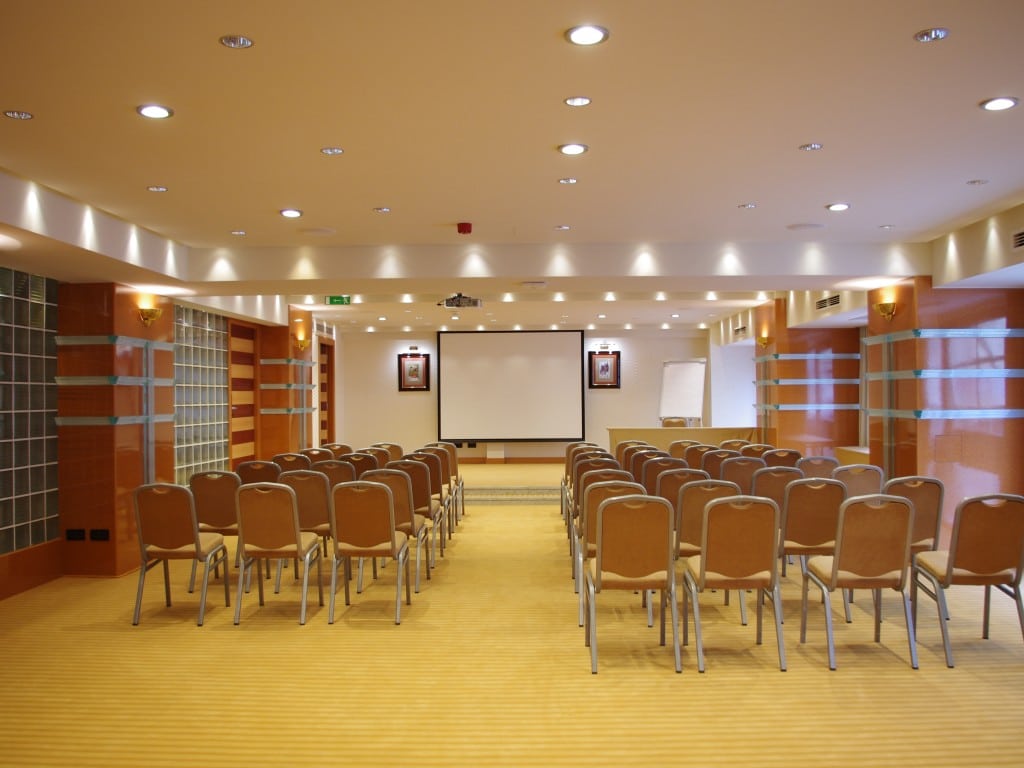
and complete sound system. The long rectangular shape works excellently for theater-style presentations.
Large Conference Halls (126-201 m²)
Ban Zrinski (126 m²)
is the largest Ban hall, fitting 50-80 people with four
windows. It bridges mid-sized and large options, offering substantial capacity with excellent natural
light.
Ban Jelačić (201 m²)
accommodates 80-120 people and features seven windows—more
natural light than any other conference hall. The very long layout (26+ meters) works brilliantly for
forward-facing
presentations.
Major Event Spaces (300-553 m²)
Centrum Hall (300 m²)
handles 100-200+ people for conferences, product launches,
or large celebrations. Four windows provide natural light rare in convention-scale venues.
Conference Halls Ban Connected (553 m²)
offers massive capacity with 13 windows
and five access points. This connected space accommodates 300-500+ participants and can likely be configured
multiple ways for simultaneous sessions or full capacity events.
What Sets These Spaces Apart
Natural Light Where It Matters
From single windows in small salons to seven windows in Ban Jelačić to 13 windows in
the
connected halls, natural light is prioritized throughout. This isn't decorative—it measurably improves
energy,
reduces fatigue, and enhances extended events.
Professional Audio-Visual
All conference halls (56 m² and up) include sound systems, multiple displays, and
sophisticated lighting control. You get professional capabilities regardless of which room you choose,
scaled
appropriately to space size.
Premium Finishing
Carpeting dampens sound and creates professional acoustics. Wallpaper adds warmth
and
sophistication. These details signal that important work happens in these spaces, not just routine
meetings.
Flexible Configurations
Theater style for presentations, classroom for training, boardroom for discussions,
U-shape for workshops—spaces adapt to how you actually work rather than forcing you into one
configuration.
Planning Made Simpler
Choose by Capacity First
Start with expected attendance. Small teams (6-15 people) use Libertas or Stradun
rooms.
Mid-sized groups (30-80) choose Ban conference halls. Large events (100+) need Centrum or the connected
spaces.
Consider Natural Light Needs
All-day events particularly benefit from natural light. Ban Jelačić's seven windows
or
the connected halls' 13 windows combat afternoon fatigue. If you're running presentation-heavy content where
screens
matter most, windowless Ban Dašković might work better.
Match Layout to Event Type
Forward-facing presentations work well in long rectangular spaces. Interactive
workshops
benefit from more square proportions. Multiple breakouts might use several smaller spaces rather than one
large
hall.
What's Included
Standard meeting rooms include screens, projectors, Wi-Fi, climate control, and
natural
daylight (where applicable). Conference halls add sound systems, plasma TVs, and premium finishes. Discuss
specific
needs with the events team—additional equipment or services can typically be arranged.
Central Zagreb Benefits
For Attendees
Easy navigation, no getting lost, walkable from hotels, surrounded by restaurants
and
cafes for breaks. The location removes friction from gathering people together.
For Organizers
Professional address signals importance, comprehensive support infrastructure
nearby,
multiple accommodation options for out-of-town attendees, and transportation hubs within reach.
Professional Event Support
You're not navigating complex logistics alone. The experienced events team
understands
room capabilities, technical requirements, and how to execute smooth events. They've managed everything from
intimate board meetings to 500-person conferences.
From Planning to Execution
Initial consultation to understand your needs, space recommendations based on
attendance
and format, technical coordination for A/V requirements, catering coordination if needed, and day-of support
to
ensure everything runs smoothly.
Making Your Decision
Visit If Possible
For significant events, seeing spaces in person helps. Walk through room flow,
understand proportions, check technical capabilities, and visualize your specific event in the actual
space.
Ask the Right Questions
What's the realistic capacity for your configuration? Can you access the room early
for
setup? What's included versus additional cost? How does catering work? What's the cancellation policy?
Understanding
details prevents surprises.
Book Appropriately
Small routine meetings might book weeks ahead. Major conferences need 6-18 months
advance notice, especially for popular dates. The earlier you book, the more options you have.
Real Advantages of Multiple Spaces
Need breakout rooms for large conferences? Run simultaneous training sessions? The
variety of spaces means you can book multiple rooms that work together rather than cobbling together
mismatched
venues across the city.
Beyond Meeting Rooms
The location offers meeting spaces, but also accommodation for out-of-town
attendees,
on-site dining options, business services, and everything else that makes multi-day conferences or extended
training
programs actually manageable.
Your Next Step
Contact the events team with your date, expected attendance, and event type. They'll
recommend appropriate spaces, discuss configuration options, provide pricing, and answer your specific
questions.
Professional guidance makes the difference between events that work and events that struggle.
Frequently Asked Questions (FAQs)
1. How do I choose the right meeting space size?
Start with expected attendance and add 20% buffer room. For every 10 people,
estimate
roughly 10-12 m² for theater style, 15-18 m² for classroom, and 20-25 m² for boardroom configurations. The
events
team can recommend specific rooms once you know your guest count and preferred setup. Consider also whether you
need
space for registration, refreshments, or networking beyond just seating.
2. What's the difference between standard meeting rooms and conference halls?
Standard meeting rooms (Libertas and Stradun salons) include screens, projectors,
Wi-Fi,
and climate control—perfect for 6-30 people. Conference halls (Ban series, Centrum, Connected halls) add
professional sound systems, plasma TVs, and premium finishes for larger groups where audio reinforcement
matters.
Choose based on group size and whether you need amplified sound.
3. Can we book multiple rooms for breakout sessions?
Yes, booking multiple spaces for conferences with breakout sessions is common. The
variety of room sizes lets you combine a large space for general sessions with smaller rooms for breakouts. Book
all
spaces when you reserve the main venue to ensure availability. The events team can coordinate setup and
transitions
between spaces.
4. How far in advance should we book for important meetings or conferences?
For routine small meetings, 2-4 weeks advance notice usually suffices. For important
board meetings or client presentations, book 6-8 weeks ahead. For major conferences, training events, or large
gatherings, especially during peak seasons (spring and fall), book 6-18 months in advance to secure your
preferred
date and space.
5. What support does the venue provide for technical setup and day-of execution?
The events team provides consultation on room selection and setup, coordinates
technical
equipment and testing, assists with catering if needed, and offers day-of support for smooth execution. For
complex
events with specialized A/V needs, discuss technical support requirements early. Most issues can be prevented
with
proper planning and communication with the experienced events team.