Places to Visit in Zagreb: A Handy Guide for Hotel Dubrovnik Visitors
Look, if you're wondering about the best places to visit in Zagreb, you're in the right spot. Zagreb isn't just another European capital. It's Croatia's cultural beating heart, and most people skip it for the beaches down south.
The city has raw authenticity that makes it special, especially when you're staying at Hotel Dubrovnik right on Ban Jelačić Square. You walk out the door and you're in the middle of everything.
Here's the thing about Zagreb: everything you actually want to see is within walking distance. And I mean everything. That's rare for a capital city.
Upper Town (Gornji Grad) Attractions in Zagreb
The Upper Town is where you need to start.
St. Mark's Church sits there with its tiled roof that looks like someone went wild with a paint-by-numbers kit. The Croatian coat of arms on one side, Zagreb's emblem on the other. It's iconic and photogenic. The church itself is often closed to tourists. The exterior is the real star anyway.
Walk a few minutes and you'll hit the Stone Gate. This 13th-century entrance has a small chapel inside dedicated to the Virgin Mary. Locals still stop here to pray and light candles. The painting of Mary supposedly survived a fire in 1731, and believers think it's miraculous.
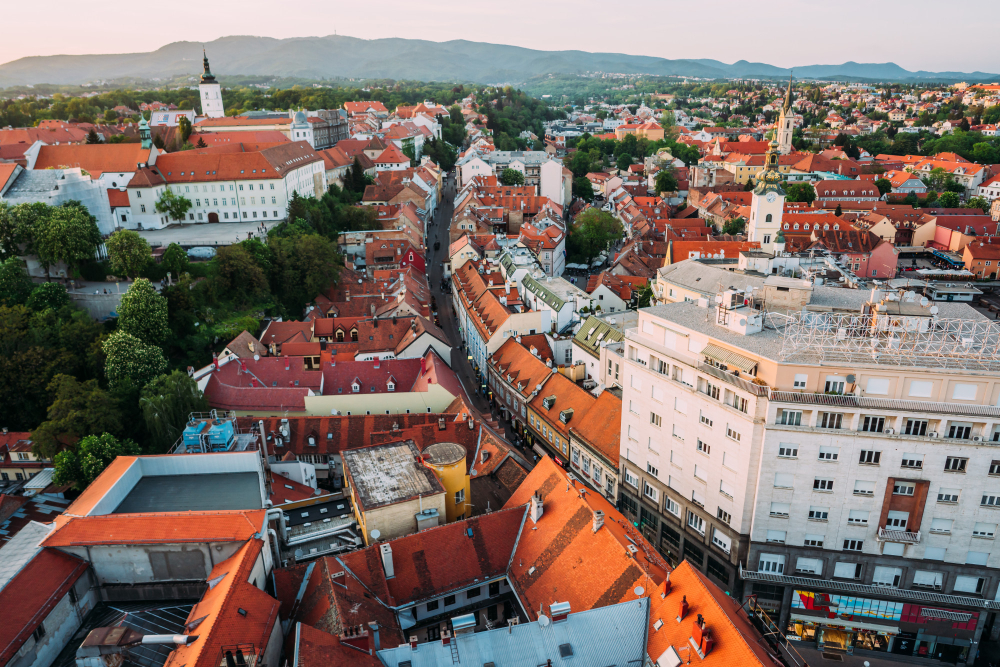
Then there's Lotrščak Tower. Every day at noon, they fire a cannon from the top. It's loud, dramatic, and tourists jump every time. The tradition started in 1877. Climb up for the view. Your legs will burn a bit, but the panorama over Zagreb's red rooftops is worth every step.
The cobblestone streets here feel like you've stepped back in time. No cars, just stone walls and quiet corners.
Ban Jelačić Square
This is the main square where everything happens.
If you're staying at Hotel Dubrovnik, you're literally on this square. Ban Jelačić Square is where locals meet, where trams converge, where street performers set up, where life happens.
The statue of Ban Josip Jelačić on his horse dominates the centre. This square is your orientation point. Lost? Come back here.
The tram station right in front of Hotel Dubrovnik connects you to the entire city. Most places to visit in Zagreb are a short walk away.
Cafes ring the square. Grab a coffee, sit outside, and watch Zagreb do its thing. Coffee isn't just coffee here, it's a social event that lasts hours.
Zagreb Cathedral
You can't miss Zagreb Cathedral. Those twin neo-Gothic spires punch into the sky at 108 metres. It's the tallest building in Croatia.
The cathedral took a beating in the 2020 earthquake. Restoration is ongoing, so scaffolding might block some views. The interior access can be limited depending on when you visit. But even with construction, it's still impressive.
The cathedral treasury holds centuries of religious artefacts, ornate vestments, and sacred objects. The surrounding area has that old-world European charm with narrow streets and hidden courtyards.
Dolac Market
Dolac Market sits just above Ban Jelačić Square. Walk up the stairs and you're there in two minutes from Hotel Dubrovnik.
This is where locals buy their food. Fresh produce, flowers, cheese, meat, fish. The vendors under red umbrellas have been selling here for decades.
Come in the morning. That's when it's liveliest. By afternoon, most vendors have packed up. The energy, the colours, the smells. It's sensory overload in the best way.
The upper level is open-air produce. The lower level has a covered fish market and butchers. Both are worth exploring if you want to see how Zagreb actually lives.
Museums in Zagreb
 Zagreb has museums that are actually interesting.
Museum of Broken Relationships is probably the most unique museum you'll ever visit. People from around the world donate objects from their failed relationships along with their stories. An axe used to destroy an ex's furniture. Love letters never sent. A wedding dress. It's emotional, raw, and weirdly relatable.
Croatian Museum of Naïve Art showcases work by self-taught artists. The pieces have this primitive, almost childlike quality that's strangely captivating. The collection is small, so you can see everything in about 30-45 minutes.
Mimara Museum houses a massive collection if you're into classical art. Paintings, sculptures, glassware, furniture. It's more traditional and comprehensive.
All three museums are walking distance from Hotel Dubrovnik.
Zagreb has museums that are actually interesting.
Museum of Broken Relationships is probably the most unique museum you'll ever visit. People from around the world donate objects from their failed relationships along with their stories. An axe used to destroy an ex's furniture. Love letters never sent. A wedding dress. It's emotional, raw, and weirdly relatable.
Croatian Museum of Naïve Art showcases work by self-taught artists. The pieces have this primitive, almost childlike quality that's strangely captivating. The collection is small, so you can see everything in about 30-45 minutes.
Mimara Museum houses a massive collection if you're into classical art. Paintings, sculptures, glassware, furniture. It's more traditional and comprehensive.
All three museums are walking distance from Hotel Dubrovnik.
Tkalčićeva Street
Tkalčićeva Street is the pedestrian strip where everyone goes to eat, drink, and hang out.
It runs parallel to Dolac Market, and it's lined wall-to-wall with cafes, bars, and restaurants. The quality is generally solid, and the atmosphere is always buzzing.
During the day, it's perfect for lunch or coffee. At night, it transforms into Zagreb's main nightlife artery. People spill out onto the street, music drifts from open doors, and the energy ramps up.
Boutique shops dot the street between the food spots. Local designers, jewellery, souvenirs that don't suck. If you're going to buy something to remember Zagreb, do it here.
Mirogoj Cemetery
Mirogoj is one of Europe's most beautiful cemeteries. The ivy-covered arcades designed by architect Hermann Bollé look like something from a gothic novel. The park-like setting with mature trees and manicured paths makes it peaceful rather than depressing.
It's not in walking distance from Hotel Dubrovnik. You'll need to take a bus or tram. But if you have an extra hour, it's worth the trip. Many famous Croatians are buried here, and the architecture alone justifies the visit.
Green Spaces Worth Visiting
Zrinjevac Park is part of the Lenuci Horseshoe, a series of parks forming a U-shape through Zagreb's Lower Town. It's formal, well-maintained, and perfect for a quick break. Fountains, pavilions, and benches everywhere.
Maksimir Park is Zagreb's oldest public park. It's big with lakes, forests, and meadows. The Zagreb Zoo is here too if you're travelling with kids. It's further out, so you'll want to use public transport.
Jarun Lake is where locals go in summer. Swimming, kayaking, cycling, beach volleyball. There are bars and cafes along the shore. If you're in Zagreb during warm weather, this is where you want to spend an afternoon.
Practical Information You Actually Need
From Hotel Dubrovnik, you can reach most places to visit in Zagreb on foot:
- Upper Town: 7-10 minutes uphill
- Dolac Market: 2 minutes
- Tkalčićeva Street: 3 minutes
- Zagreb Cathedral: 5 minutes
- Museums: 5-15 minutes depending on which one
The tram stop is in front of the hotel. Trams are clean, frequent, and cheap.
Zagreb Card gives you free public transport and discounts at museums, restaurants, and attractions. Available for 24 or 72 hours.
Walking is the best way to experience Zagreb. The city centre is compact and pedestrian-friendly.
Conclusion
Zagreb isn't trying to be Venice or Paris. It's just itself, and that's refreshing.
The places to visit in Zagreb range from medieval architecture to quirky museums to vibrant street life. You get history without it feeling like a history lesson. You get culture without pretension.
Staying at Hotel Dubrovnik puts you in the absolute centre of everything. You wake up on Ban Jelačić Square, walk seven minutes to the Upper Town, grab lunch at Dolac Market, explore a museum, and end your day on Tkalčićeva Street.
Location isn't just about convenience. It's about experiencing a city the way it's meant to be experienced. And that makes all the difference when exploring the best places to visit in Zagreb.
Frequently Asked Questions (FAQs)
1. What are the must-see places to visit in Zagreb for first-time visitors?
Focus on Upper Town (St. Mark's Church, Stone Gate, Lotrščak Tower), Ban Jelačić Square, Zagreb Cathedral, and Dolac Market. Add the Museum of Broken Relationships if you want something unique.
These cover Zagreb's history, culture, and daily life. You can see all of them in one full day if you start early, or spread them across two days for a more relaxed pace.
2. How many days do I need to see the main attractions in Zagreb?
Two full days covers most places to visit in Zagreb comfortably. Day one for Upper Town, cathedral, Dolac Market, and museums. Day two for Tkalčićeva Street, parks, and any attractions you missed. Add a third day if you want to explore at a slower pace or take a day trip to Plitvice Lakes.
3. Is Zagreb expensive for tourists?
No, Zagreb is one of the more affordable European capitals. Restaurant meals cost significantly less than Western Europe. Museum tickets range from 5-10 euros. Public transport is cheap. A coffee won't break your budget.
You can have a quality experience without spending heavily. Staying centrally at places like Hotel Dubrovnik means you walk everywhere and save on transport costs too.
4. What's the best time of year to visit Zagreb?
Spring (April-May) and autumn (September-October) offer the best weather without summer crowds. Temperatures are comfortable for walking. If you want Christmas markets, visit in December.
Zagreb's Advent is ranked among Europe's best. Summer (June-August) is warm but can be hot and busy. Winter (January-March) is cold but quiet, with fewer tourists and lower prices.
5. Can I walk to most attractions from Ban Jelačić Square?
Absolutely. Ban Jelačić Square is Zagreb's central point, and most major attractions are within 5-15 minutes walking distance. Upper Town is 7 minutes uphill. Dolac Market is 2 minutes. Tkalčićeva Street is 3 minutes.
Museums are scattered around the centre, all walkable. Only Mirogoj Cemetery, Maksimir Park, and Jarun Lake require public transport. The compact layout makes Zagreb incredibly pedestrian-friendly.